Off the beaten pathBelgium and the Netherlands
Baarle: the town where the border runs through houses
In Baarle, Belgium and the Netherlands are tangled in dozens of enclaves. The border cuts through homes and cafés, and the front door sets the address.
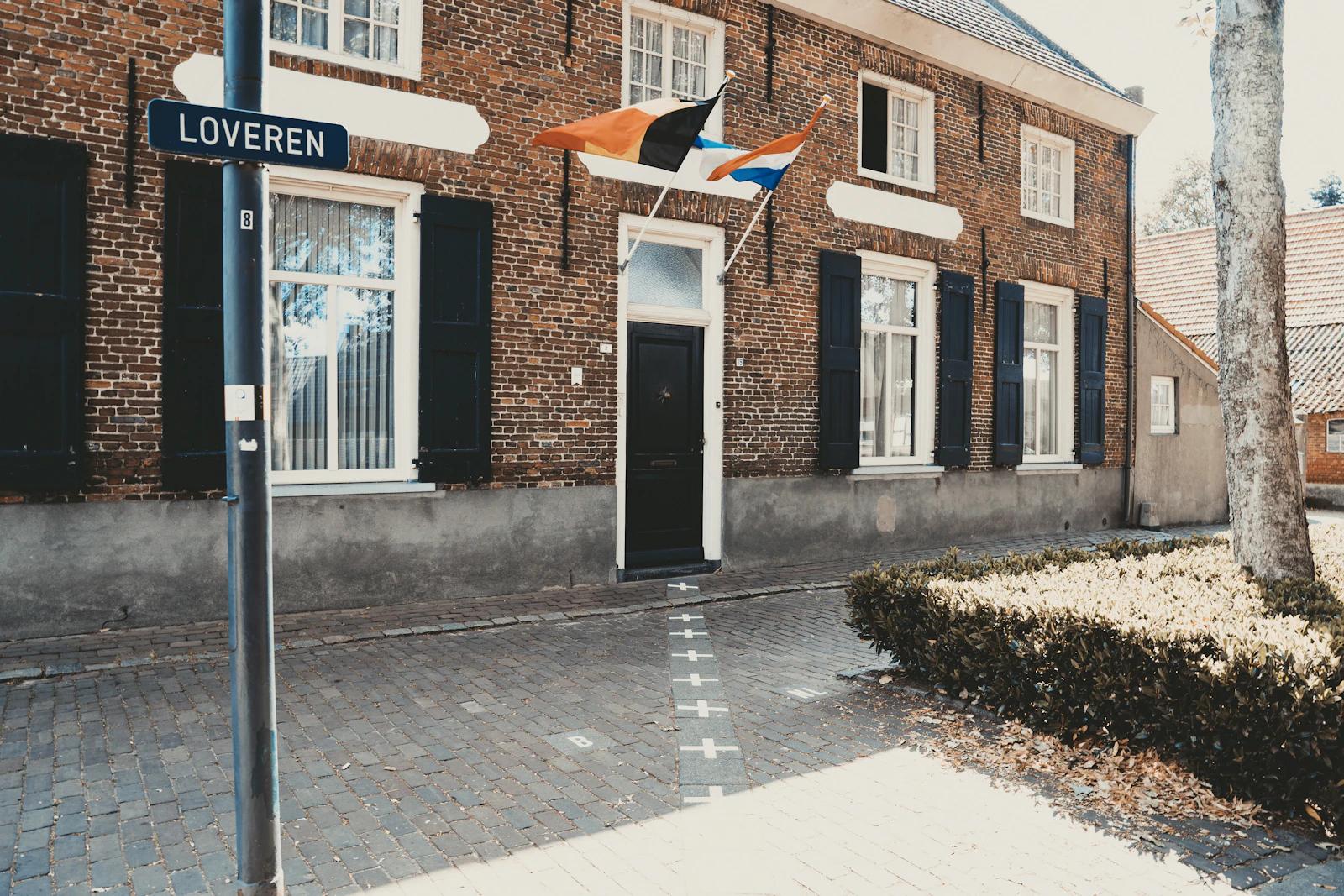
In Baarle, you can sit at a café with one foot in Belgium and the other in the Netherlands. The town is in the southern Netherlands, but it's dotted with pockets of Belgian territory, and the border between the two countries runs through streets, pavements, homes, cafés and shops.
On a map it looks like a mistake. In practice, it's two municipalities sharing the same place: Baarle-Nassau, which is Dutch, and Baarle-Hertog, which is Belgian.
How many enclaves there are in Baarle
Baarle-Hertog is made up of 26 separate parcels of land. Four of them connect to the rest of Belgium. The other 22 are Belgian enclaves entirely surrounded by Dutch territory.
It gets stranger. Inside those Belgian enclaves sit seven Dutch enclaves: bits of the Netherlands surrounded by Belgium, which is itself surrounded by the Netherlands. Six of them are inside the largest Belgian enclave.
So nobody gets lost, the border is marked on the ground with white crosses and the letters B and NL. Small Belgian and Dutch flags appear on lamp posts and above front doors, according to a report by the British newspaper The Telegraph.
Why Baarle's border looks like this
The puzzle dates back to the Middle Ages. For centuries, the Lords of Breda and the Dukes of Brabant swapped, sold and split plots of land. When the border between Belgium and the Netherlands was fixed in the 1843 Treaty of Maastricht, those plots became national territory exactly as they were.
One small rectangle of farmland stayed disputed until 1995, when it was finally assigned to Belgium, The Telegraph notes.
The front door decides the country
When a house straddles the line, the front-door rule applies: the address belongs to the country where the main entrance is. That has consequences. According to The Telegraph, some residents have moved their front doors to end up on the side with lower taxes.
Businesses split by the border work differently. A firm whose premises sit in both countries pays tax on its profits to both governments, in proportion to the square metres on each side. At a brasserie on the main square, the pavement tables are bolted to the ground a fraction over the Dutch side. For tax reasons, the owner says.
The enclaves that sheltered Belgians in the First World War
The odd geography once made a real difference. In the First World War, Germany occupied Belgium, but the Netherlands was neutral. To reach the Baarle-Hertog enclaves, the German army would have had to cross Dutch territory, and the Dutch government didn't allow it.
Those scraps of Belgium became a refuge. According to Wikipedia's entry on the town, a clandestine radio transmitter was smuggled in and used by the Belgian resistance.
Everything in duplicate
Two countries in one place means two sets of public services. According to Wikivoyage, almost everything in Baarle comes in pairs: two churches, two town halls, two post offices, two fire stations and two police forces, which now share a building.
For locals, that's just normal life. Visitors notice it in the details: the flags next to house numbers, the signs marking each enclave and the businesses that pick which side to sit on.
What people do in Baarle today
With the European Union and the Schengen area, border checks are gone. Smuggling, a local tradition for centuries, lost its point after the European single market arrived in 1993.
Today the traffic is tourists and bargain hunters. At the time of The Telegraph's report, petrol cost about 50 euro cents less per litre on the Belgian side, and cars queued at the pumps. Plenty of visitors come just for the classic photo, one leg in each country.
How to visit
The place to start is the tourist office at Singel 1 in Baarle-Nassau, affiliated with the tourist boards of both countries. According to Visit Brabant, the Dutch province's tourism board, the town sits in the triangle between Tilburg and Breda in the Netherlands and Turnhout in Belgium.
The easiest way to make sense of the puzzle is the Enclave Experience route. It's 7 kilometres, on foot or by bike, past twelve enclave markers in the town centre. There are also guided tours that explain the enclaves' history and cross the border several times.
You can drive in on the provincial roads that run through town. From Belgium, De Lijn bus 46 serves Baarle, according to Wikivoyage.
Practical tips
- Where it is: in the southern Netherlands, near the city of Breda.
- Where to start: at the tourist office and on the 7-kilometre Enclave Experience route.
- What to look for: the white crosses on the ground, the flags above the doors and the house numbers, which on some streets start over when you cross into Belgium.
- Documents: there are no border checks between the two countries, but carry your passport, as on any trip in the Schengen area.
FAQ
Is Baarle in Belgium or the Netherlands?
Both. Baarle-Nassau is a Dutch municipality, and Baarle-Hertog is a Belgian municipality made up of enclaves scattered inside Dutch territory.
How many enclaves does Baarle have?
There are 22 Belgian enclaves inside the Netherlands and seven Dutch enclaves inside those Belgian enclaves.
How do you know which country a house in Baarle is in?
By the front door. The address belongs to the country where the main entrance is.
What is there to do in Baarle?
Follow the 7-kilometre Enclave Experience route past twelve enclaves, look for the border markings on the ground and take the classic photo with one foot in each country.
Do you need a passport to cross from one side to the other?
There are no border checks, since Belgium and the Netherlands are both in the Schengen area.
Another curious border between two European countries lies on the Bidasoa river: Pheasant Island spends six months a year as Spanish territory and six months as French.
Sources
- Europe's weirdest border – where locals move their front doors to pay less tax, The Telegraph (republished by Yahoo): the border markings, the Treaty of Maastricht, the land disputed until 1995, taxes on split businesses, the café tables and the petrol price gap.
- Baarle-Hertog, Wikipedia: the number of Belgian and Dutch enclaves, the medieval origin of the border and the enclaves' role in the First World War.
- Baarle, Wikivoyage: the front-door rule, the house numbers that start over when you change country, the duplicated services and the bus from Belgium.
- Enclavedorp Baarle-Hertog-Nassau, Visit Brabant: the tourist office, the location, the Enclave Experience route and guided tours.
Keep reading
Off the beaten pathPortugal
Monsanto, Portugal: the village built between boulders
In Monsanto, granite boulders serve as walls and even roofs. Why the village was built this way, the story of its 1938 title and how to visit.
Off the beaten pathWorldwide
Places that limit tourists: quotas, time slots and bans
Kyoto closed alleys, Machu Picchu has a daily cap and Maya Bay shuts for two months a year. The rules in each place and how to plan so you don’t miss out.
Off the beaten pathFaroe Islands
Faroe Islands: the archipelago that closes for maintenance
Every year, the Faroe Islands close tourist sites for a weekend and invite volunteers to fix them. How it works, and how to get one of the spots.